

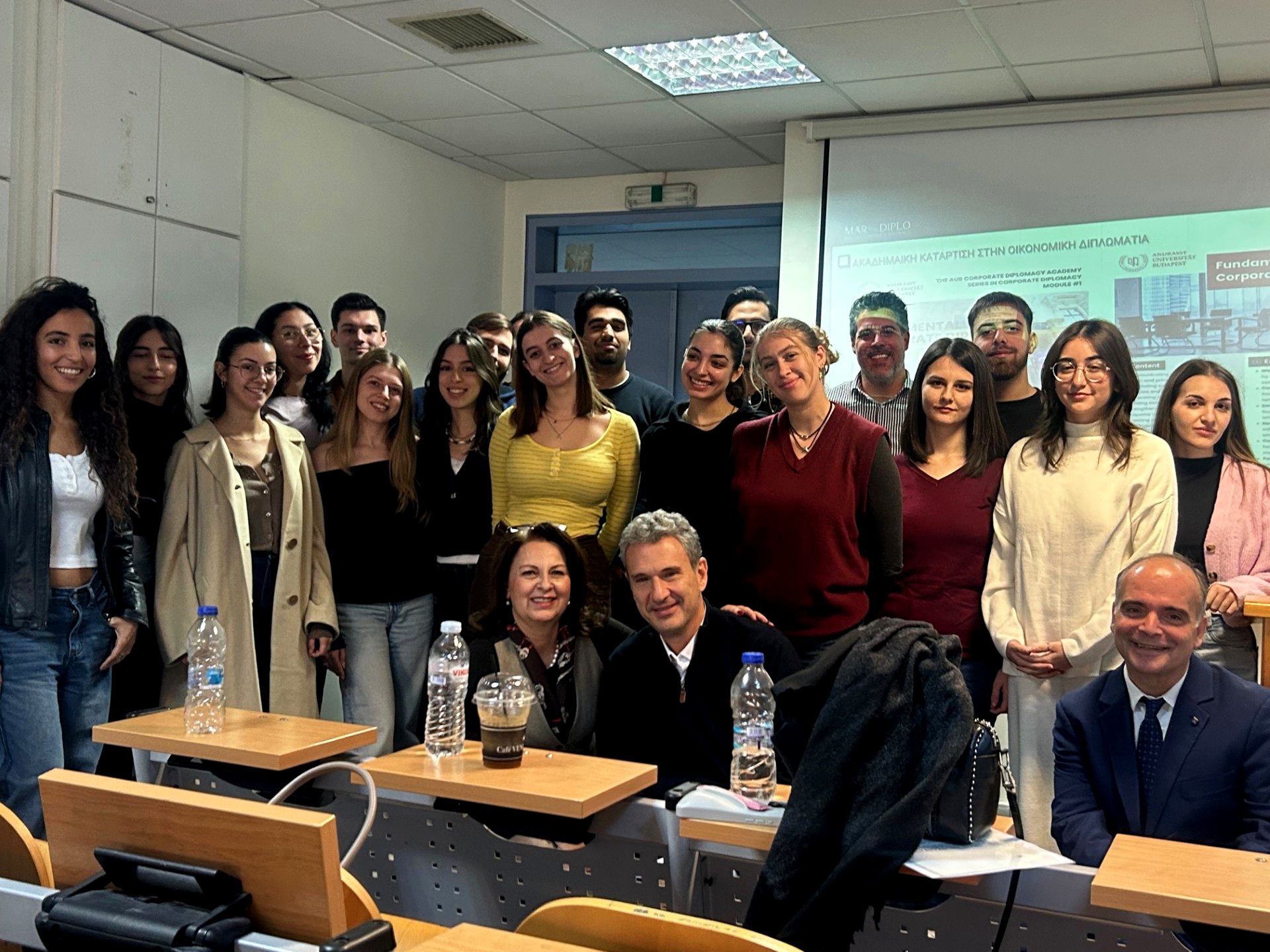
MARDIPLO had the distinct honour of joining Professor Andreas Papastamos’ European Economy class at Panteion University on Friday 12.12.2025 as a guest speaker, presenting the evolving role of maritime diplomacy in today’s interconnected global economy.
At MARDIPLO, we recognise that contemporary maritime challenges extend far beyond operational and legal frameworks. Maritime diplomacy leverages soft power, strategic influence and trust-based engagement to address disputes that traditional mechanisms often struggle to resolve, while simultaneously supporting sustainable business development and long-term partnerships. During the session, we explored how proactive diplomatic strategies can create value for maritime stakeholders, enhance corporate positioning internationally, and deliver outcomes that are both cost-effective and reputationally sound—particularly within the complex geopolitical and economic environment shaping Europe’s maritime sector.
Throughout the session, we explored maritime security in the Baltic Sea as a practical case study, highlighting the region’s strategic importance, complex threat environment, and the necessity for enhanced situational awareness for both commercial and public actors. The discussion included challenges such as GPS/AIS’S interference, the activities of the “dark fleet,” and the vulnerability of undersea infrastructure like the Nord Stream pipelines. We also presented a conceptual model for integrating commercial risk monitoring, intergovernmental liaison, and crisis management, illustrating how MARDIPLO and Vanguard Tech combine operational data, strategic analysis, and diplomatic engagement to maintain safe and sustainable maritime operations.
For students, the session aimed to bridge theory with practice by offering practical insights into how economic policy, geopolitics and diplomacy directly influence maritime decision-making. Through real-world examples and interactive discussion, students were encouraged to think critically about career pathways in maritime affairs, the strategic skills required beyond technical expertise, and the role of diplomacy as a value-creating tool for both public and private sector actors.
It was a pleasure engaging with the students through insightful discussion and thoughtful questions, and contributing to their understanding of how diplomacy, economics and maritime affairs intersect in practice. We would like to sincerely thank Professor Papastamos for the invitation and the opportunity to contribute to the academic dialogue.